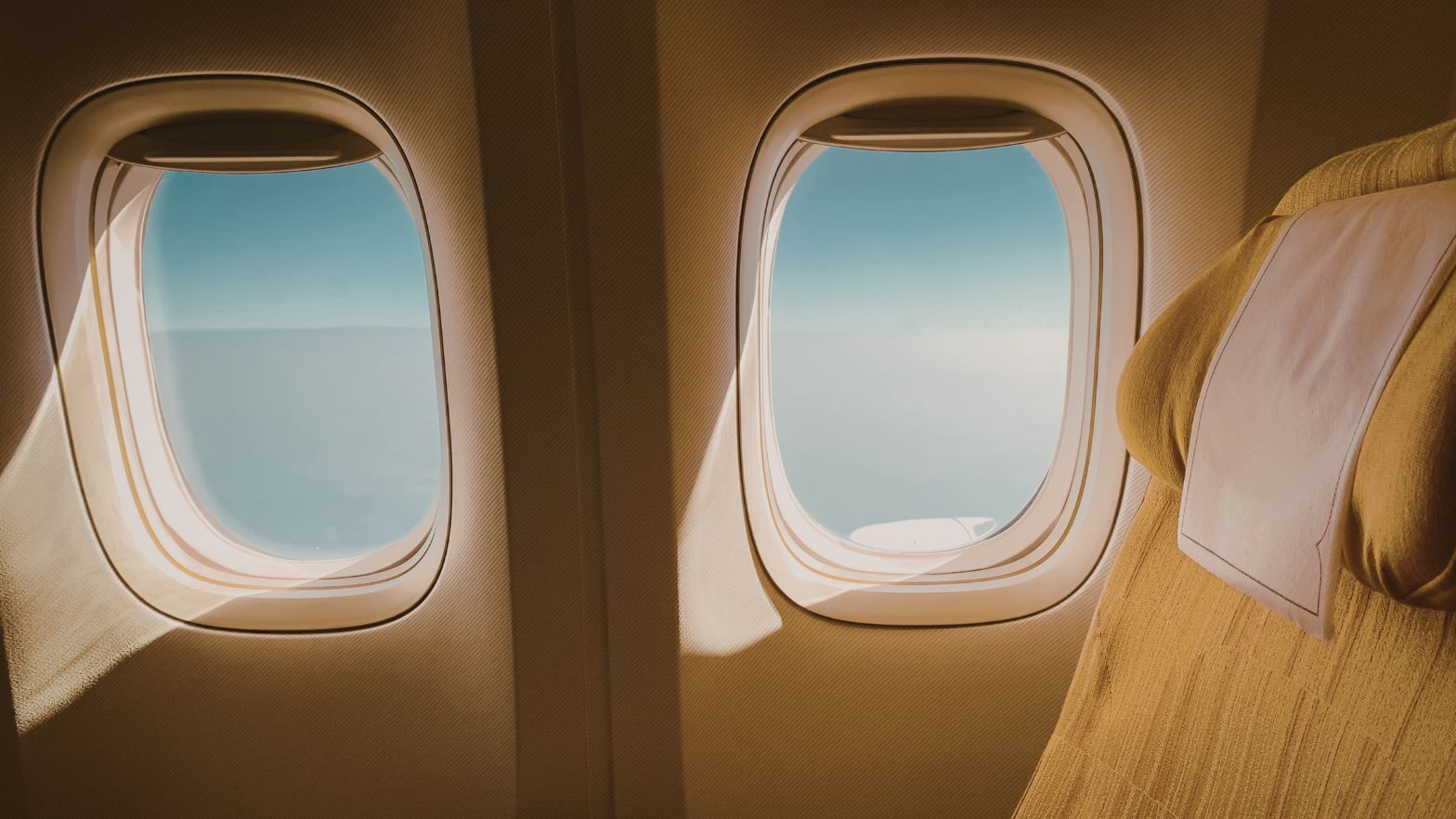
Air travel carries a certain rhythm. The hum of engines, the gentle pressure change, the soft thud as wheels lift from the runway. Yet among all these familiar details, one feature often sits unnoticed: the round windows. They frame cloudscapes beautifully, but their shape serves a purpose far deeper than aesthetics. The story behind these curved frames involves engineering insight, lessons learnt through tragedy and a quiet commitment to safety woven into every aircraft that takes to the sky.
A Brief Look at Early Aircraft Windows
In the early years of commercial aviation, aircraft designers used square windows. The thinking was simple: square frames offered convenience during construction and allowed more straightforward placement in the fuselage. As flights began to rise higher and aircraft speeds increased, these square openings started revealing their flaws.
At high altitudes, the pressure inside the cabin remains stable while the pressure outside drops significantly. This difference places continuous stress on the fuselage. When windows were square, the corners turned into weak spots. Stress concentrated heavily in these areas, and over time, the metal around them began to crack. The consequences of such cracks in a pressurised aircraft can be devastating.
How Did a Tragic Event Change Aviation Forever?
The world learnt this lesson the hard way in the 1950s. The de Havilland Comet, the first commercial jetliner, experienced catastrophic failures mid-flight. Investigations revealed that the square windows and other sharp-edged openings had created stress points. Repeated pressurisation cycles weakened the structure until it tore apart.
This finding reshaped the future of aviation. Engineers realised that aircraft design needed to follow the natural flow of stress. They began to study how shape influences structural integrity more closely. Out of those lessons emerged the curved window we see today, one of the simplest yet most important innovations in aviation safety.
Why Do Curved Windows Handle Stress Better?
Round windows allow stress to move evenly around the frame. Without sharp corners, the pressure has no single point to attack. Every curve directs force naturally across the surrounding material, reducing fatigue. In a pressurised cabin that expands and contracts with every flight, this uniform distribution becomes essential.
The curved edges also strengthen the window frame itself. Glass and acrylic components tolerate changes in temperature and pressure more effectively when shaped symmetrically. While the window looks delicate, each layer has been designed to respond to pressure shifts with resilience.
What Holds the Window in Place?
Airplane windows are not just a single pane. They form a small system working together:
An outer panel
Built to bear the brunt of pressure differences, this panel takes on most of the load during flight. It seals the aircraft tightly and holds firm even as the cabin expands slightly while climbing.
A middle panel
This portion acts as a backup in case the outer panel encounters damage. It maintains balance and keeps the layers aligned.
An inner panel
This is the one passenger’s touch. It shields travellers from direct contact with the structural layers and helps maintain the temperature inside.
A tiny ventilation hole at the bottom of the inner panel allows pressure between the layers to equalise. This small detail prevents fogging and gives the outer panel the responsibility of handling the main pressure load.
What Could Happen If Windows Were Square Today?
With modern materials and stronger metals, some may assume square windows could return without consequences. However, even with advanced technology, corners still gather tension. Over hundreds of flights, those corners would experience fatigue more quickly than the curved design. The potential risks include:
Structural weakness
Sharp corners can turn into starting points for cracks. Once a crack begins, it can spread rapidly under pressure.
Fuselage damage
Aircraft bodies are crafted to act like sealed shells. Any weakness interrupts that harmony and increases the loads on surrounding panels.
Reduced aircraft lifespan
Even minor stress concentration shortens the number of cycles an aircraft can safely perform.
Higher maintenance requirements
Engineers would need to inspect square windows far more frequently. Preventing fatigue would demand constant monitoring, raising costs and complicating operations.
The Blend of Design and Comfort
While safety drives the choice of window shape, curved edges also improve the experience for passengers. The rounded frame offers a smoother visual flow. Light disperses more evenly along its edges, giving passengers a gentle, comfortable view.
The shape also fits naturally with the contoured fuselage. Aircraft bodies taper and curve to cut through the air with minimal resistance. Round windows align with this aerodynamic form, reducing disturbances on the outer surface.
A Glimpse Into How Aviation Thinks
The story of round airplane windows reflects a broader theme in aviation: small details matter deeply. Every improvement, no matter how subtle, rests on careful testing and experience. Curved windows may appear simple, yet they stand as evidence of years of study, learning and refinement.
Engineers design aircraft with a quiet respect for mathematics and physics. Every layer, joint and material speaks to that respect. The round window is one of the clearest examples of how engineering principles travel with us every time we step on a plane.
Concluding Thoughts
Round airplane windows may appear like simple curved frames, but they hold a remarkable story. They represent a shift in the way aviation understands pressure, structure and safety. Their shape stands as a reminder that even the smallest features in an aircraft carry great responsibility.
If aircraft windows remained square, modern aviation would face challenges that no advanced material could entirely erase. The rounded form continues to protect every flight, offering strength where it matters most.