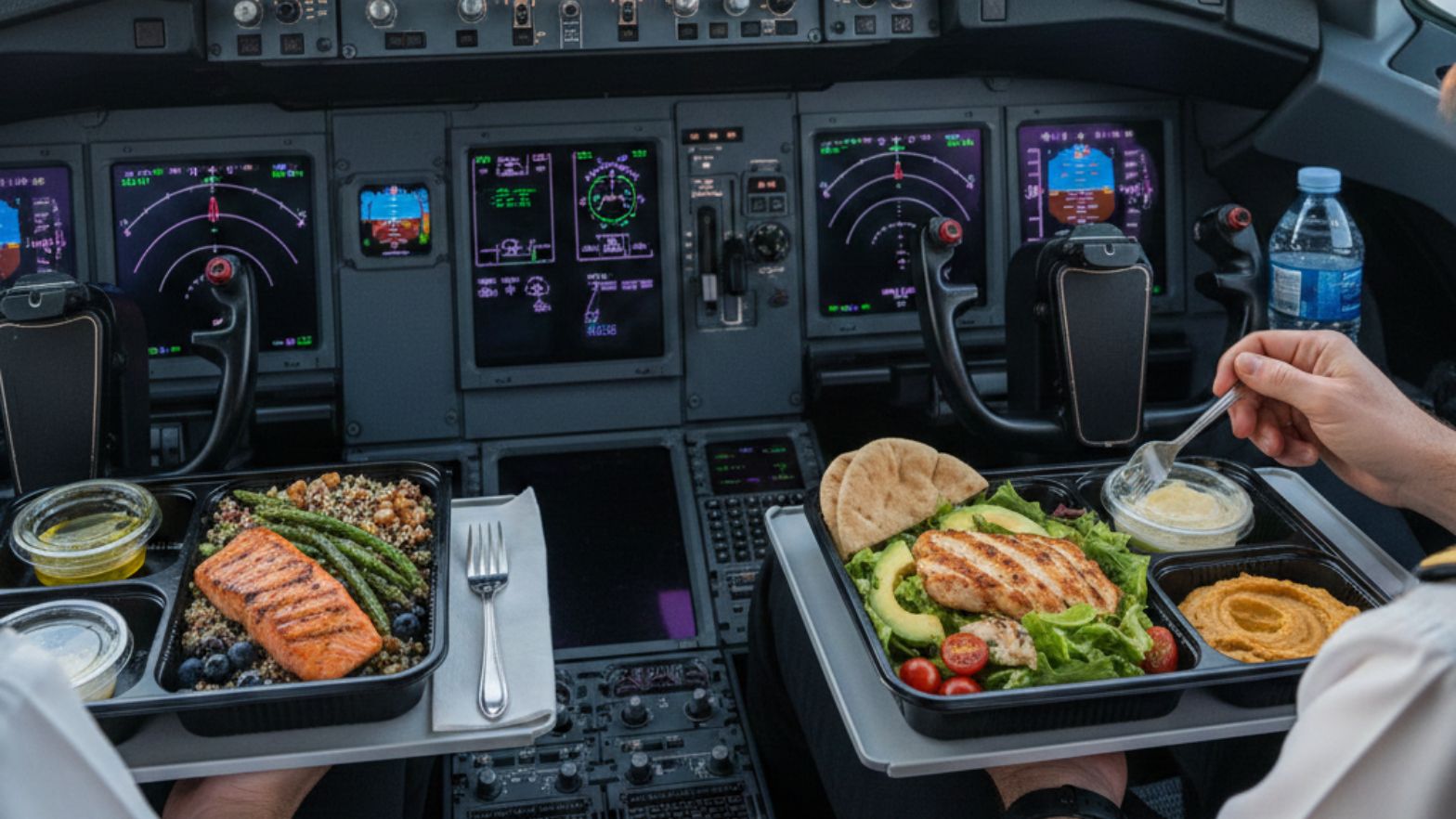
You’re settling into your seat, the flight attendant brings around the meal trolley, and somewhere in that sealed cockpit up front, two people are eating completely different food. Strange, right? While you’re choosing between the pasta and the roll, the captain and first officer have already been served meals that look nothing alike. This peculiar dining arrangement has nothing to do with personal preference and everything to do with keeping everyone aboard safe at 35,000 feet.
Aviation safety often hides in plain sight. We notice the elaborate dance of pre-flight checks, the insistence on electronic devices being switched off (well, that one’s relaxed a bit now) and the curious ritual of window shades going up during landing. But the real fascinating bits? Those live in the details that most passengers never think about. The different meals rule happens to be one of aviation’s smartest, most practical safety measures, born from hard lessons and refined over decades of commercial flight.
When Food Becomes a Flight Risk
The logic behind separate meals seems almost too simple once you hear it. If both pilots eat the same dish and that dish happens to be contaminated or triggers an allergic reaction, you’ve suddenly got two incapacitated crew members and a plane full of passengers who probably aren’t keen on an unscheduled adventure. Food poisoning doesn’t always announce itself immediately. Sometimes it takes a few hours. Sometimes it hits hard and fast.
Back in 1982, a flight from Boston had both pilots fall violently ill after sharing a seafood meal. The plane had to make an emergency landing with the flight engineer at the controls (yes, planes used to have three-person cockpits). That incident, among others, cemented what had been a growing practice into an ironclad rule. Airlines now mandate that cockpit crew members eat different meals, prepared separately, when possible, from different batches.
The rule extends beyond just the main course. Even snacks and beverages get rotated. If the captain has the beef, the first officer gets the fish or vegetarian option. If one drinks the orange juice, the other sticks to apple or water. It sounds excessive until you remember these two people are the only ones qualified to land several hundred tonnes of aircraft carrying precious human cargo.
The Sterile Cockpit Rule: No Chatting Below 10,000 Feet
Here’s another one that makes perfect sense once explained. Below 10,000 feet, particularly during takeoff and landing, cockpit conversation must remain strictly professional. No discussions about weekend plans, no jokes about the mother-in-law, no commentary on last night’s cricket match. The Federal Aviation Administration introduced this sterile cockpit” rule in 1981 after reviewing accidents where pilot distraction played a role.
Those phases of flight handle the bulk of aviation incidents. The aircraft moves through rapidly changing altitudes; the crew coordinates with air traffic control, monitors instruments, watches for other traffic and manages complex approach or departure procedures. One misheard instruction or overlooked warning light can spiral quickly. The sterile cockpit rule recognises that human attention has limits. When things get critical, the brain needs all available processing power focused on flying the plane.
Flight attendants follow similar protocols. They know not to call the cockpit with service-related questions during these phases unless something urgent requires pilot attention. That cup of coffee the captain requested? It can wait until cruise altitude.
Why Pilots Don’t Wear Watches (Or Do They?)
The wristwatch question trips people up. Yes, pilots wear watches. Some wear quite expensive ones, actually. But here’s the thing: they don’t rely on them. Aircraft cockpits contain multiple redundant timing systems. The primary flight display shows coordinated universal time. Separate backup instruments do the same. Flight management computers track time with precision that most wristwatches can’t match.
The confusion comes from an older rule that’s largely historical now. In the early days of aviation, mechanical watches could be affected by pressure changes and extreme temperatures. Pilots received specific guidance on watch types suitable for flight duties. Modern chronometers handle these conditions easily, but the regulations evolved to emphasise that personal timepieces serve as backups only. The aircraft’s instruments remain the authoritative source.
Some airlines do mandate specific watch types for their pilots, usually as part of uniform standards. But the safety concern shifted long ago from “Will this watch work at altitude?” to “Don’t let personal devices become distractions or single points of failure.”
The Eight-Hour Bottle-to-Throttle Rule
Aviation has a zero-tolerance approach to alcohol in the cockpit, backed by specific timing requirements. In India and most countries, pilots must abstain from alcohol for at least eight hours before flying, though many airlines extend this to twelve or even twenty-four hours. The blood alcohol content must be precisely zero when reporting for duty.
This rule gets tested regularly. Random breath analyser checks happen at airports worldwide. Pilots caught violating alcohol regulations face immediate grounding, licence suspension and often criminal charges. The consequences seem harsh because the stakes are enormous. Alcohol affects reaction time, decision-making, spatial awareness and judgement, all critical factors when you’re responsible for an aircraft.
The rule also covers cabin crew, maintenance engineers and air traffic controllers. Anyone whose impairment could compromise flight safety falls under these strict protocols. Airlines maintain confidential support programmes for crew members struggling with alcohol issues, recognising that early intervention prevents tragedy better than punishment after the fact.
Three Feet of Separation: The Tarmac Safety Zone
Watch ground operations at any airport, and you’ll notice workers maintaining careful distances from moving aircraft. Regulations require ground personnel to stay at least three feet (about one metre) away from aircraft surfaces during taxi operations. Jet engines create invisible danger zones. The intake can pull objects and people towards it with frightening force. The exhaust blast can knock someone off their feet or send loose equipment flying.
Wing walkers, those crew members who guide aircraft during tight manoeuvres on the ground, receive special training. They use standardised hand signals, wear high-visibility gear and maintain constant visual contact with the cockpit. One miscommunication during pushback or taxi can result in a collision with ground equipment, other aircraft or terminal structures.
The three-foot rule extends to passengers too, though they rarely encounter situations where it applies. Those rare occasions when you walk across the tarmac to board? The ground crew ensures everyone stays well clear of danger zones, following invisible lines that mark safe passage.
Why Do Window Shades Go Up for Landing?
This one puzzles passengers regularly. Flight attendants walk through the cabin before landing, asking everyone to raise the window shades. Some people assume it helps with temperature control or has something to do with the aircraft’s systems. The real reason connects directly to emergency evacuation.
If something goes wrong during landing, those precious seconds after the aircraft stops can determine who gets out safely. Raised window shades let passengers and crew quickly assess conditions outside. Is there fire on one side? Is the wing intact? Which exits look safe to use? Darkness or lowered shades delay this assessment when every second counts.
The rule also helps rescue crews outside. They can see into the cabin, assess the situation and determine the best approach. It’s a simple measure with profound implications for survival rates in accidents.
The Final Approach
Aviation safety layers precaution upon precaution, creating systems where single failures rarely cascade into disasters. The different meals rule represents this philosophy perfectly. Simple, practical, based on real incidents and maintained rigorously because complacency kills.
Next time you fly, you might notice these details differently. The separate meals aren’t about pampering pilots with variety. The quiet cockpit during descent shows professionals managing the most dangerous phase of flight. The watchful ground crew maintain invisible safety zones that protect everyone. Each rule carries the weight of lessons learnt, often at terrible cost, refined into practices that make modern aviation remarkably safe.