On June 12, 2025, a tragic aviation incident unfolded at Ahmedabad’s Sardar Vallabhbhai Patel International Airport when an Air India Boeing 787-8 Dreamliner, Flight AI‑171, crashed shortly after take-off. Bound for London with over 240 passengers and crew members onboard, the aircraft lost altitude and crashed into a building just seconds into its journey. The crash claimed at least 270 lives, making it one of India’s most severe air disasters in recent memory.
While the country mourns, the investigation into what went wrong is just beginning. With multiple agencies involved, domestic and international, the situation demands a careful, neutral and thorough analysis. This blog examines the sequence of events, current findings, technical complexities and what measures can be taken to improve aviation safety moving forward.
The Incident: What Happened?
Air India Flight AI‑171, a Boeing 787‑8 Dreamliner (tail no. VT‑ANB), departed Ahmedabad bound for London Gatwick. It had 242 souls on board, 230 passengers and 12 crew, including citizens of India, the UK, Canada and Portugal.
The flight took off around 13:38 IST (08:08 UTC). CCTV and radar data captured a steep climb to approximately 625 ft, followed by a rapid descent less than a minute after departure. According to the experts, the landing gear remained extended, and the flaps may have been in an incorrect configuration.
The aircraft crashed into a hostel building of BJ Medical College, resulting in massive structural damage. Of the 242 onboard, only one passenger survived. Ground casualties are estimated at at least 39 deaths and over 60 injuries.
Immediate Recovery and Response
Ahmedabad Municipal Corporation, local emergency teams, NDRF, BSF, CISF, CRPF and the army swiftly responded, deploying earth-moving equipment and medical personnel to clear debris and assist victims. Air India initiated interim compensation (₹25 lakh per victim) and arranged trauma counselling.
The DGCA ordered Air India to remove three senior officials tied to crew scheduling and oversight failures related to fatigue, licence issues and rostering problems discovered post-incident.
Air India, backed by its parent Tata Group, emphasised that the aircraft had a “clean history”, was regularly maintained and had recently installed one fresh engine. It also announced an ongoing “AI‑171 Trust” to support long-term victim assistance.
Investigation and the Role of Black Boxes
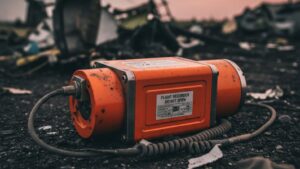
Both sets of DFDR (digital flight data recorder) and CVR (cockpit voice recorder) were recovered, around 13 and 16 June, from the tail area. One was more badly damaged externally than the other.
India’s AAIB inaugurated a new black-box analysis lab in Delhi (April 2025) with HAL support at ₹9 crores, but the recovered recorders sustained extreme heat exposure and structural damage, which may exceed the lab’s capability.
Currently, MoCA and AAIB have stated that no final call is made to send black boxes abroad. A joint multidisciplinary AAIB team is reviewing technical, security and safety considerations before deciding on domestic or international decoding.
Options include processing at AAIB Delhi, HAL near Lucknow, the U.S. National Transportation Safety Board (NTSB) lab, the UK’s AAIB workplace or Singapore. If the U.S. is chosen, transport would be under Indian supervision, with the NTSB and UK AAIB also involved.
Investigation Scope & Supporting Agencies
The AAIB leads the investigation under ICAO norms, with assistance from the NTSB (U.S.), the UK AAIB, Boeing and GE Aerospace. Investigators are analysing:
- FDR/CVR data (if recoverable)
- CCTV and witness footage
- Weather and runway data
- Aircraft logs and maintenance history (noting engine replacements, flap/gear settings)
- Pilot communications and procedures
- Potential bird-strike evidence
- Debris and metallurgical samples
- Pilot scheduling and human factors
DGCA has inspected Air India’s Dreamliner fleet, seeking to detect broader safety violations. No immediate safety flag was publicly noted.
Possible Technical Uncertainties
Flight Control Settings
CCTV suggests that landing gear was deployed, and flaps may have been misconfigured. Both would drastically impair climb performance.
Engine Performance
The recent engine swap, with the right engine serviced in 2023 and installed in March 2025, needs examination for pre-flight testing and behaviour under dual-thrust conditions.
Power Loss or RAT Deployment
Speculation includes possible Ram Air Turbine (RAT) deployment or rapid engine failure; witness claims indicate a “lost power and thrust” mayday. This needs validation via FDR.
Fire and Recorder Damage
Black boxes were exposed to extreme fire, making data extraction delicate. These recorders typically survive 1000°C, but physical compromises (like falling impacts) complicate recovery.
Crew Operations
With only 36 seconds airborne, synchronisation between crew, ATC and systems may hold clues. Crew training, rest logs and procedural compliance are being reviewed due to concerns from DGCA.
Procedural and Organisational Implications
Lab Readiness vs. Volume
India’s new AAIB laboratory was intended to reduce foreign dependency. However, this crash exceeds its current processing capabilities. There’s a need for investment in advanced forensic data extraction: forensic X-ray, chip-level recovery and deep cryogenic data chip handling.
Crew Management Systems
The DGCA mandate to relieve scheduling managers after discovering systemic violations highlights that crew rostering technology (ARMS to CAE Flight & Crew) and oversight must be reinforced.
Cross-Agency Coordination
The multi-tiered inquiry, AAIB, DGCA, airline internal probes and OEMs must coordinate efficiently, addressing both individual flight causes and broad systemic gaps.
What Could Improve in the Future?
Technical Measures
- Advanced Lab Capability
Upgrade AAIB’s lab with US/UK/NTSB-level capabilities: memory board extraction, high-temp core analysis and multiple layers of redundancy recovery.
- Regular Damage Drills
Simulate damage scenarios for black boxes (fire, crush and corrosion) to cross-check whether recorders remain readable under worst-case conditions.
- Real-Time Telemetry
Consider real-time flight-data downlink to ground servers, a feature advancing in modern airliners, which supplements physical black-box data if recorders are compromised.
Operational Reforms
- Crew Oversight & Roster Tracking
Implement real-time compliance tracking for crew duty time, rest, licencing and training. A centralised digital audit system should alert regulators.
- Flap/Gear Alerts & Training
Review standard operating procedures to ensure take-off configurations are cross-checked by both crew and automated alerts. Install stall/flap misconfiguration warning enhancements in older Dreamliners.
- Pre-flight Checks & Dual-Thrust Scenarios
Improve engine-out and dual-thrust simulations in pilot training, especially during low-altitude operations, to prepare crews for emergency response under abnormal climb patterns.
Institutional & Policy Guidelines
- Formal Lab Accreditation
Seek international IEC/ISO accreditation for AAIB labs, with regular independent drills and audits by foreign agencies (NTSB or UK AAIB).
- Clear Protocol for Black Box Transfer
Establish formal bilateral cooperation agreements defining timelines, custody chains and data-sharing procedures with global investigative bodies.
- Annual Safety Audits
DGCA should perform annual audits of Fortune‑500-level airlines like Air India, especially following global-scale incidents, focusing on human factors, systems and maintenance.
Timelines & Expectations
As per ICAO rules, a preliminary factual report is expected within 30 days from June 12. This will focus on sequence, crew actions and data recovery progress.
A full technical and civil final report covering all probable causes and recommended safety actions is likely within 9–12 months.
DGCA’s ongoing scrutiny of Air India’s Dreamliner fleet will continue to ensure high levels of compliance. No systemic fleet issues have been found yet.
The Bottom Line
This tragedy is arguably India’s worst air disaster in nearly a decade and the first fatal incident involving a Boeing 787 Dreamliner since its inception. While key questions remain about configuration, engine function and decision-making, the AAIB-led investigation, backed by international partners, aims to find answers grounded in data, not speculation.